Music for Children ages 5-9
Dear Parents,
I believe we lay a foundation for a love of music by nurturing each child’s creative spirit.
You’ll soon discover I’m an encourager, providing support with a positive and affirming teaching style.
Wondering if your child is ready for lessons?
Program fees
30-minute lesson each week in your home
Sept- Dec – $672
Jan – June – $1008
Click to download further details re: studio policies + calendar
Openings for September 2026
Several long-term students graduated this spring. Some with lesson times up to 2 hours each week. This has opened up several hours for younger students to begin lessons with me.
For the first time since 2012, I have several spaces available for new students!
Monday (availability)
Tuesday (availability)
Wednesday (availability)
Thursday (availability)
Saturday (morning)
What parents say…
“I didn’t expect it to be this good.”
“Susan has an incredible bond with the children. She lets them be silly and have fun, within the parameters of rules, boundaries and respect. They learn so much with Susan, because she is brilliant and truly cares about each child (and they know it!).”
“Susan knows how to ride the ebb and flow of authentic and natural learning with astonishing ease and grace. She knows how to inspire each child – the perfect amount of tenderness and toughness to help them connect with and to awaken them to their inner music.”
5 and 6 year olds love to be spontaneous and creative
within their music lessons so I bring hands-on music theory learning, improvisation games, note-reading games, play-by-ear games, rhythm games.
Some have ability to focus at the piano for a long time and some really need very short lessons to begin.
I’ve created a “Choosing Chart” specifically for this age group which gives your child the agency to choose ‘what’s next’ in a lesson and gives me the space to prepare material within a balanced framework to match where your child is at the moment.
These young ages are THE era where spontaneous creativity is at it’s peak. Respecting the expressive and creative needs of a young child is an amazing way to grow a musical, creative, confident person.
Some young children love high expectation and the demands of learning challenging material. They request it. They love to practice…a lot! In my experience, for a 5 or 6 year old, they are the exception not the rule.
Wherever your 5 or 6 year old’s interests lie, we will follow them.
7 – 9 year olds want to play real songs
whether it’s classical music or movie themes they love to play songs they recognize.
They want me to lead them but they also want me to follow their interests.
They’ve usually become proficient readers at school and the ability to track with the eyes and discern small marks on paper (letters and punctuation) transfers to reading music as well.
Naturally, not all children are interested in learning to read notes. Sometimes a child is so naturally musical that playing by ear is just the easiest thing for them and reading notes feels pointless from their perspective.
For example, did you know Tori Amos entered the Peabody music program at age 5? She was the youngest student ever admitted and was expelled at age 11 for refusing to read sheet music, insisting on playing by ear instead. Since then, she has released sixteen studio albums and was inducted into the National Women’s Hall of Fame.
7, 8 and 9 year olds still LOVE to play games and when I introduce improvisation, most are keen to play improvised duets with me at the end of their lessons.
With encouragement and sometimes parental expectation, regular practice can become a regular thing. Not for all though. Sometimes regular practice is a goal for when they’re older.
This can be a perfect age to step into the Royal Conservatory of Music exam pathway. Often, it’s the parent who sees and feels this readiness in their child and asks me about it.
I believe there are many pathways a child can follow in music and if a parent loves the idea and is willing, we can easily step into the RCM world at this age.
What parents say…
“My 9 year old loves the one-on-one with Susan. Susan is not only a wonderful teacher but a wonderful adult for my daughter to spend time with. The lessons have been flexible and very beneficial.”
“Thanks so much for the amazing work that you do! You bring so much joy and love, not to mention a depth of knowledge and experience to your work – we love it!”
“Susan is kind, caring and a wonderfully inspiring teacher. Her gentle demeanour and quick praise has brought out our son’s artistic side like no other teacher or program has before.”
How we begin…
Contact me through my contact form or send an email.
We’ll have our initial conversation by phone or email.
If it seems like I may be a good fit for your family, we can set up a time to meet in person and have a free trial lesson.
Once you’ve made your decision, we can confirm and reserve regular lesson times for your family.
What do in-home lessons look like?
I arrive at your home with a Mary-Poppins-style bag of magic and fun, prepared to meet your child at their level of focus, cooperation, interest and ability.
Because your child is in their own home and playing their own piano, the entire experience of learning music is more relaxed, spacious and playful than it might be if you had to transport your child to someone else’s music studio.
Instead of climbing into your car and travelling to see your teacher, it’s the other way around. I travel to you and your child may greet me at their door and lead me to their own music space.
Your time, your child’s time and younger siblings’ time is no longer spent in the car before and after lessons.
“It’s a treat for our kids (and us as parents) to have in-home lessons and not to have to shuttle off busily to another after-school program!”
“I love that you got right down on the floor with our daughter within the first five minutes. You make it all so accessible to her. Your receptivity to her playfulness and your gentle guidance – she’s loving to learn about music. THANK YOU, SUSAN!”
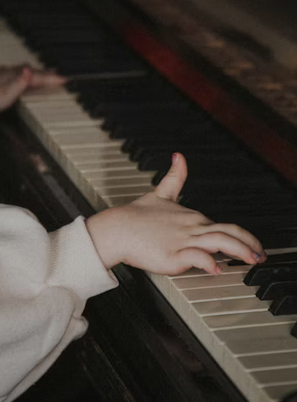
What is a personalized, child-centered program?
It means I don’t confine my approach to one ‘system’, one method book series or one way of seeing your child’s path.
I personalize your child’s learning experience and every step of their musical journey.
If you are imagining your child will sit and focus on a piano bench for 30 minutes, my lessons will likely look a little different than what you’re expecting!
Examples of ‘child-centered’ teaching:
- If your child has a request for a favorite song, I do my best to bring that song into their lessons at whatever level they are at
- If your child is ready for lessons but not quite ready to read notes, then we learn by ear or create visuals that make sense to your child.
- If your child seems to resist learning the “proper” way to sit at the piano then we can take the bench away and allow for movement.
- Your child loves the idea of lessons and loves to play but is not at all interested in “regular practice time” then in my opinion there is no rush or expectation for regular practice time at this young age. They will still benefit enormously from regular lessons 1-2 times per week and practice time becomes a goal for when they are a bit older. I have tools to facilitate this!
I think we all know that what works for one child,
may not work for another.
Historically, traditional piano lessons
- do not recognize different learning styles
- do not offer beginner experiences beyond traditional method books
- do not make allowances for the needs of a younger brain and body
- tend to be more successful when children are teenagers
This is why a personalized approach
that acknowledges the importance of
- play
- visual learning
- flexibility
- choice
- joy
can be so much more effective with young children.
What parents say…
“If Susan taught brick-laying, I’d send my kids!”
“Susan has helped my daughter blossom again after much loss and chaos. Thank you for helping her to find her spirit and creative forces again! We’d be lost without you!
“Susan is one of those people that is a true blessing to know. She has an endearing personality that in our family makes “Susan-time” a cherished and anticipated time. Her passion for music and the musical profession are so evident in all that she designs in Musicalia, in her interests in community, performances and in her personal learning pursuits. I admire her expertise as well as her personable nature.”
“I love that my daughters love their programs. My oldest cries if she has to miss it because of illness or vacation. She learns so much, not feeling like she is ‘working’ at all.”
Young children learn
differently than
tweens, teens & adults!
Over the last 50 years, I’ve developed a deep understanding of a young child’s need for play and creativity, as well as agency and nurturing guidance.
Younger children love to play games and we spend a portion of each lesson away from the piano learning about music in more visual, colorful ways.
I structure lessons and curate repertoire for young children with choices so your child will have a sense of agency and thoughtfulness around how their lesson plays out.
What children say…
“She’s fun & she inspires me to play and be creative.”
“I really like my music with Susan. I had never liked music at school, and now because of Musicalia, I do! (Nathan, age 7). His mom says, “Best experience ever! Nathan looks forward to the improvised duets at the end of his lesson.”
I’m not exactly a typical music teacher.
My training and experience includes…
- creating curriculum so I don’t feel a need to follow piano method books although I do make use of them as a tool for kids who I think will enjoy them
- work with infants and preschoolers
- working with groups
- offering adaptive lessons for special populations
- facilitating brain-based, play-based curriculum at numerous conferences, teacher-trainings and events
- publishing books and articles for my peers
- being seconded (twice!) to the Ministry of Education to work on Fine Arts documents
- an education degree and am recognized internationally as a Orff Master Teacher and Canadian Orff Specialist
- running my own music and movement school for many decades where I created pioneering approaches to working with infants and young children and where I offered teacher-training programs
I’m a multi-instrumentalist!
Once piano lessons are underway, we may discover your child is interested in playing the guitar…or the violin or…a wind instrument or in singing.
So, rather than say no, we may switch instruments/add a new instrument/voice lessons to their lesson time and increase their lesson time to accomodate.
I grew up in a musical family where we all played many instruments all the time, so for me it feels natural to bring in variety when a child has that kind of interest.
What parents say…
“Every lesson is unique and remarkable because Susan is always in the moment, and she has the ability to follow and/or guide our child to the next great moment. We love Susan. Keep up the great energy, work, enthusiasm. We look forward to our time with you every Saturday morning.”
“Lessons with Susan are warm, fun, structured, motivating with an eye on the long term of life long musicality. The fun and positivity doesn’t mean low expectations!”
Playful piano lessons
bring a magical ‘time-out-of-time’ experience to your child’s education.
Private lessons transport us to the days before the digital world of screens, AI and the internet.
Research is confirming more and more that young children benefit in deep, lasting ways when we postpone their involvement with digital living, instead surrounding them with books, music, conversation, community, art, crafts, outdoor play and learning experiences that require deep concentration.
Music lessons develop many aspects of our being
- the ability to listen and ask questions
- the ability to engage and communicate with a person outside the family
- the ability to create something beautiful with their hands and body
- the ability to literally create something from nothing by learning to improvise and compose music
- the ability to learn an art over time
- enhancing our sensitivity to the nuances of melody, harmony and rhythm to increase our love of music
“Susan’s energy is amazing. She enjoys her work and her passion for music, kids & creating all shines through!!”
“Thank you for your lesson today! Our daughter did a complete about face after you left and is filled with such joy at the moment. Thank you!!!”
“Bless you beautiful Susan for making music magical, inspiring and life-giving.
Mobile lessons
in your home !
What parents say…
“Susan, I can’t begin to express how much you mean to my family! You have brought music to my family. You have supported me through hard times and guided our son on his journey when we could not partake in anything else. Your gift extends far beyond teaching music.”
“She is remarkable! Our children like absolutely everything about lessons with Susan. Seriously.”
“Thank you so much for yet another wonderful year of music with our daughter! You have nurtured such a wonderful love of music and joy in music. We feel truly blessed to have you in our lives!”
Common questions
Do you teach popular music? YES
Do you prepare students for exams? YES
Do you use the Royal Conservatory repertoire? It depends on your child’s goals. Only with some kids
Does my child have to do exams? NO
Do you teach students to improvise? YES
Do you teach theory? YES. I begin teaching theory through super fun games as soon as your child starts lessons.
Do you work with teens? YES
How many lessons per week? It depends. Typically once a week but sometimes more often.
Do you teach other instruments? Yes, I’m a multi-instrumentalist so can explore other instruments with your child including guitar, recorder and other wind instruments, voice, theory, percussion, rhythm.
My child has special needs and learning challenges. Can you adapt your teaching to suit? Most of the time, yes. I have a background in music therapy, developmental movement therapy, learning assistance and special needs work so I’m accustomed to adapting lessons to suit each child.
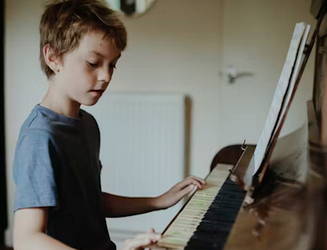
Some students respond to a more relaxed learning situation requesting pieces they hear on the radio or social media.
Some students love a more serious approach, preparing for exams and learning Royal Conservatory repertoire with ear training and technique, including formal music theory. These families tend to have more of a commitment to practice and encouraging conversation in the home supporting that journey.
Some students want it all! Exams and a range of repertoire from conservatory to pop songs.
Regardless of commitment to practice and styles of music enjoyed, I engage all students in some form of improvisation during their lessons. All students learn music theory as part of their lessons.